
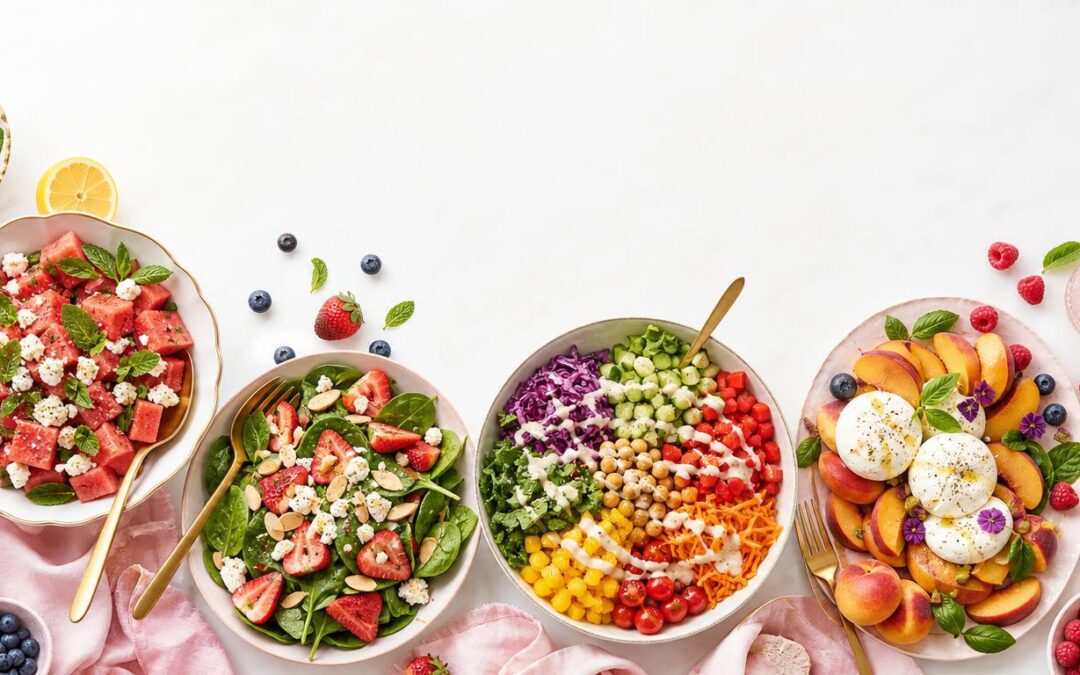
For years I treated my skin as a problem to fix from the outside — serums, masks, the whole bathroom shelf. It wasn’t until a summer when money was tight and I was eating my way through a friend’s allotment glut (tomatoes, cucumbers, more courgettes than any human needs) that I noticed my skin looking genuinely better. Calmer, plumper, that lit-from-within thing I’d been buying products to chase. It turned out my lunch was doing more than my skincare ever had.
That’s what these salads are built on. Below you’ll find the quick skin-nutrition basics (painless, I promise), my five-step formula for building a glow salad from whatever’s in the fridge, and the ten I make on repeat — each with full ingredients, the method, a pro tip from my own kitchen, and a rough nutrition estimate. Plus three dressings worth keeping in a jar all week. A note on the numbers: they’re approximate and shift with your portions and brands.
The Glow Connection: How Skin-Loving Foods Actually Work
Your skin renews itself constantly, and the raw materials for that renewal come straight from your plate. No single meal transforms your complexion overnight (anyone promising that is selling something), but eating skin-supportive foods consistently genuinely shows up over weeks — in hydration, plumpness, and tone. Here are the key players worth knowing:
- Vitamin C (citrus, berries, bell peppers, tomatoes) — essential for collagen production, the protein that keeps skin firm.
- Healthy fats (avocado, olive oil, nuts, seeds, salmon) — build cell membranes that hold moisture in. Skin without enough good fat looks dull, full stop.
- Beta-carotene (carrots, sweet potato, mango, leafy greens) — converts to vitamin A, supporting renewal and a warm, healthy tone.
- Lycopene (tomatoes, watermelon) — an antioxidant that supports skin’s resilience in sunny months, and it’s better absorbed with a little fat, so tomatoes plus olive oil are a power couple.
- Omega-3s (salmon, walnuts, chia, flax) — support a calm, supple complexion and help soothe the redness that comes with inflammation.
- Water-rich produce (cucumber, watermelon, lettuce, courgette) — hydration starts internally, and summer produce is basically edible water.
- Zinc and vitamin E (pumpkin seeds, almonds, chickpeas) — the skin-repair crew, quietly fixing things behind the scenes.
The Glow Salad Formula: Build Your Own in 5 Steps
Before the recipes, here’s the formula behind every one of them, so you can improvise endlessly with whatever your market or fridge shelf offers:
- 1. A hydrating base — leafy greens, cucumber, shaved courgette, or even watermelon cubes.
- 2. A vitamin C hero — berries, citrus segments, tomatoes, or bell pepper.
- 3. A healthy fat — avocado, olive oil, nuts, seeds, or feta in moderation.
- 4. A protein anchor — chickpeas, lentils, grilled chicken, salmon, eggs, or quinoa, so it’s a meal, not a snack with ambitions.
- 5. A flavor spark — fresh herbs, lemon zest, a drizzle of honey, chili flakes, or pickled onion. This is what makes you crave the salad instead of enduring it.
Base, vitamin C, fat, protein, spark. That’s it. Now let’s get to the recipes — or rather, the glorious not-cooking.
10 Glow-Boosting Summer Salad Recipes
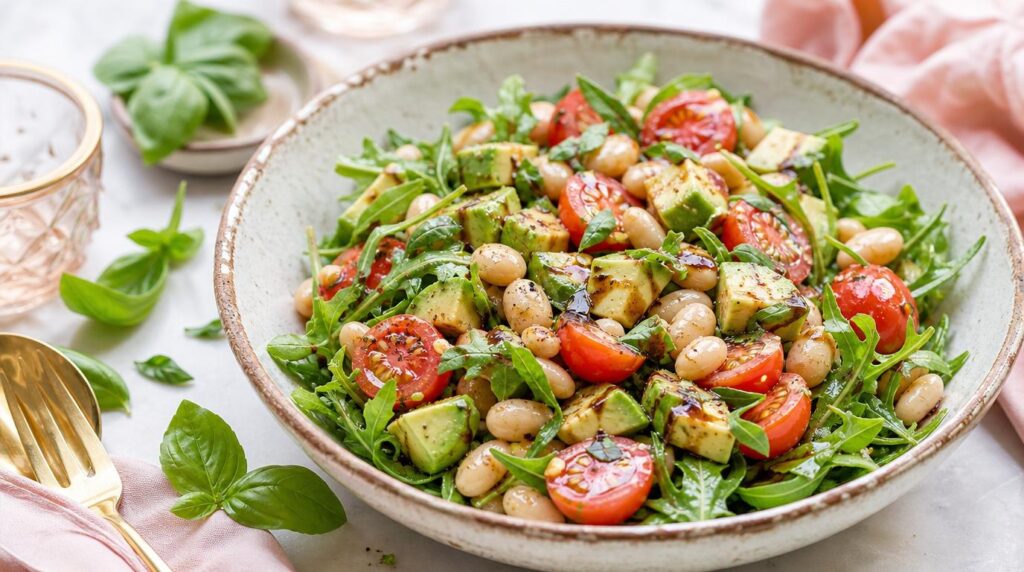
1. The Classic Glow Bowl: Tomato, Avocado & White Bean
This is the one I make when there’s nothing in the house — there’s always a tin of beans and a sad tomato somewhere. It started as a fridge-clear-out and became the bowl I eat two or three times a week all summer.
The skin story: lycopene from tomatoes, moisture-locking fats from avocado, plant protein and zinc from white beans.
You’ll need: 2 cups cherry tomatoes (halved), 1 ripe avocado (cubed), 1 tin white beans (rinsed), 1/4 red onion (thinly sliced), a big handful of rocket, fresh basil, 2 tbsp olive oil, 1 tbsp balsamic vinegar, salt and pepper.
Make it: Toss everything gently in a large bowl, adding the avocado last so it keeps its shape. Tear the basil over the top, drizzle with oil and balsamic, season, and serve straight away.
Pro tip: Salt the tomatoes on their own for five minutes first. They release their juices and turn almost dressing-like, so the whole bowl tastes deeper.
Per serving (approx., serves 2): 320 calories, 11 g protein, 9 g fiber.
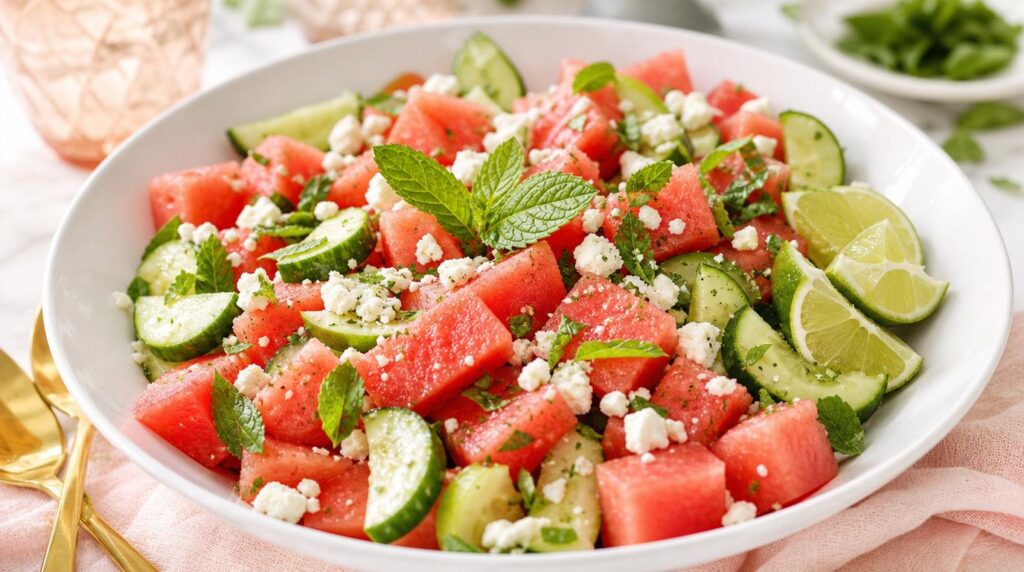
2. Watermelon, Cucumber & Feta Hydration Salad
The first time I served this at a barbecue, people were skeptical of the watermelon-and-cheese combination — then the bowl was empty before the burgers were off the grill. Now I’m asked to bring it every time.
The skin story: watermelon and cucumber are over 90% water — hydration you can eat — plus lycopene and a salty-sweet flavor moment.
You’ll need: 3 cups watermelon cubes, 1 cucumber (in half-moons), 75 g feta (crumbled), fresh mint, juice of 1 lime, 1 tbsp olive oil, a pinch of flaky salt.
Make it: Combine the watermelon and cucumber, scatter feta and torn mint over the top, then dress with lime, olive oil, and salt. Serve very cold.
Pro tip: Assemble it at the last minute. Watermelon weeps quickly once salted, so dress it just before it hits the table or you’ll have a puddle at the bottom.
Per serving (approx., serves 4): 130 calories, 4 g protein, 9 g natural sugar.
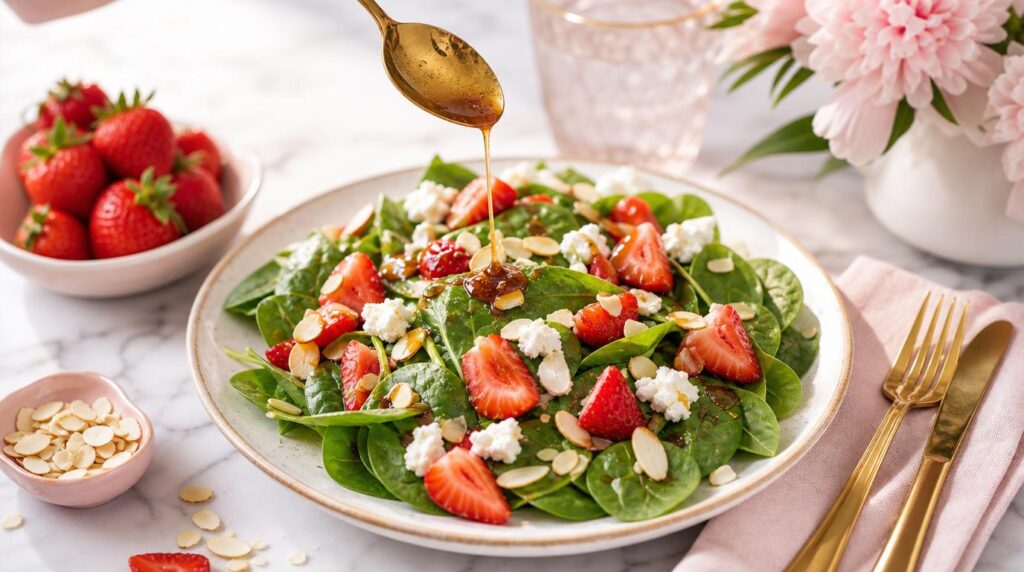
3. Strawberry, Spinach & Toasted Almond Salad
This is my June salad, made the week local strawberries finally arrive and I buy far too many. The warm, nutty almonds against the cold sweet berries is the contrast that keeps me coming back.
The skin story: strawberries deliver vitamin C for collagen support, spinach brings beta-carotene, and almonds add vitamin E — a complete glow trio.
You’ll need: 4 cups baby spinach, 2 cups strawberries (quartered), 1/3 cup almonds (toasted, roughly chopped), 50 g goat cheese (optional), 2 tbsp olive oil, 1 tbsp balsamic, 1 tsp honey, a pinch of black pepper.
Make it: Whisk the oil, balsamic, honey, and pepper. Toss the spinach and strawberries with the dressing, then finish with the almonds and little dollops of goat cheese.
Pro tip: Toast the almonds dry in a pan until they smell nutty, then let them cool completely before adding. Warm nuts wilt the spinach the moment they land.
Per serving (approx., serves 2): 290 calories, 8 g protein, 6 g fiber.
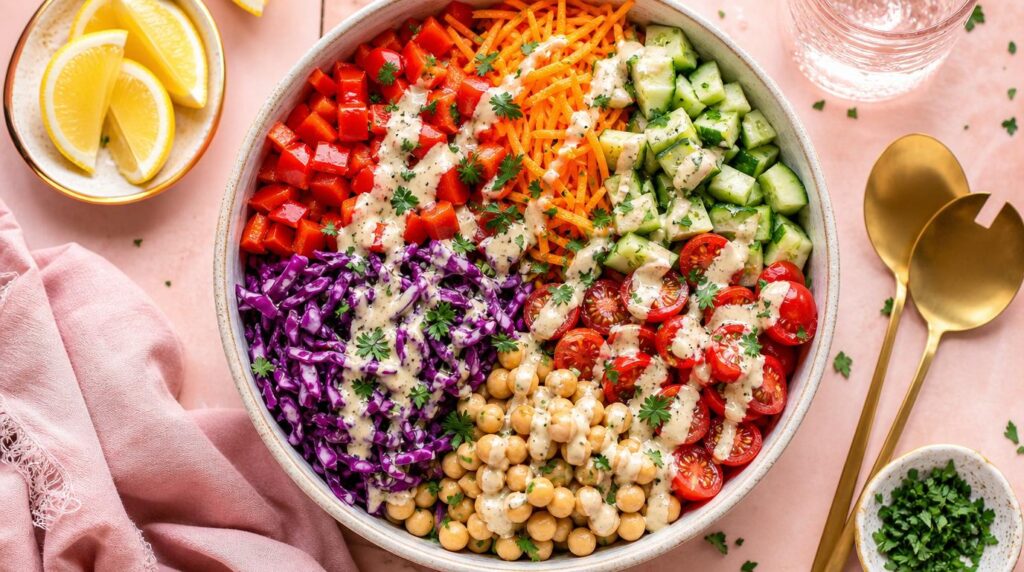
4. Rainbow Chopped Salad with Lemon-Tahini Dressing
I make a big bowl of this on Sunday and it’s my lunch for three days running — it actually gets better as it sits. The lemon-tahini dressing is the thing that makes a pile of chopped veg feel like a proper meal.
The skin story: eating a literal rainbow covers the full antioxidant spectrum, and tahini brings zinc and healthy fats.
You’ll need: 1 cup each of chopped red bell pepper, grated carrot, chopped cucumber, halved cherry tomatoes, and shredded red cabbage; 1 tin chickpeas (rinsed); fresh parsley. Dressing: 2 tbsp tahini, juice of 1 lemon, 1 small garlic clove (grated), 2–3 tbsp water, salt.
Make it: Whisk the dressing until creamy, adding water gradually until pourable. Toss all the vegetables and chickpeas together, dress generously, and shower with parsley.
Pro tip: Tahini seizes and goes stiff the moment it meets lemon juice — don’t panic. Keep whisking in water a spoonful at a time and it loosens back into a silky pour.
Per serving (approx., serves 3): 240 calories, 9 g protein, 8 g fiber.
5. Grilled Salmon & Citrus Glow Salad
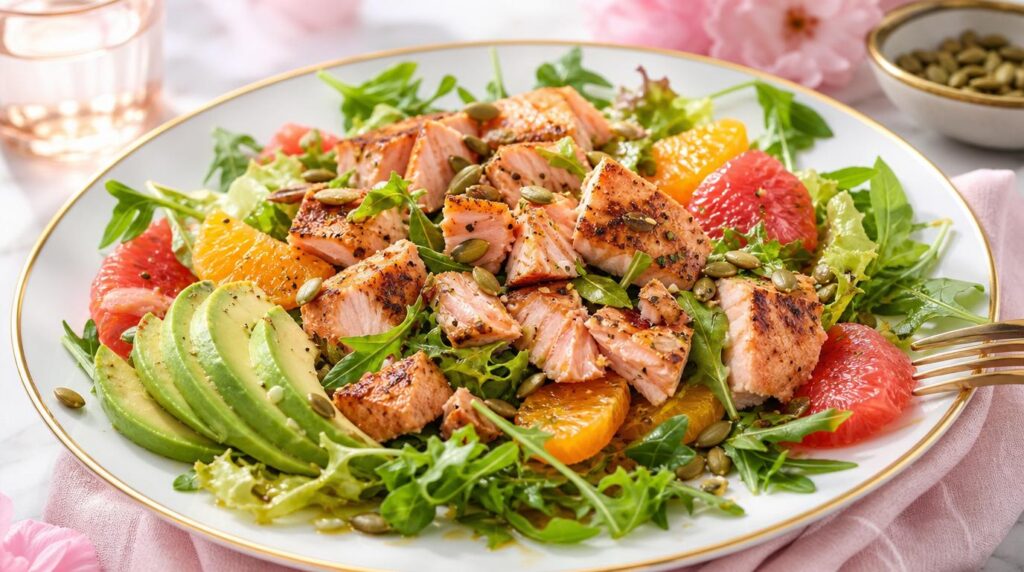
This is my “treat myself on a Friday” salad — slightly more effort, completely worth it. The warm salmon over cold citrus and greens feels like something I’d order out, made in my own kitchen in fifteen minutes.
The skin story: salmon is the queen of omega-3s for supple, calm skin, and citrus stacks vitamin C on top. The closest thing to a facial on a plate.
You’ll need: 2 salmon fillets, 4 cups mixed greens, 1 orange and 1 grapefruit (segmented), 1/2 avocado (sliced), 1/4 cup pumpkin seeds, olive oil, salt, pepper. Dressing: 2 tbsp olive oil, 1 tbsp fresh orange juice, 1 tsp Dijon mustard, 1 tsp honey.
Make it: Season the salmon and grill or pan-sear 3–4 minutes per side. Arrange greens, citrus, and avocado on plates, flake the warm salmon over the top, scatter pumpkin seeds, and drizzle with the whisked dressing.
Pro tip: Segment the citrus over a bowl and squeeze the spent membranes — that caught juice is your dressing’s orange juice, no waste and maximum flavor.
Per serving (approx., serves 2): 430 calories, 28 g protein, omega-3 rich.
6. Mango, Black Bean & Lime Fiesta Salad
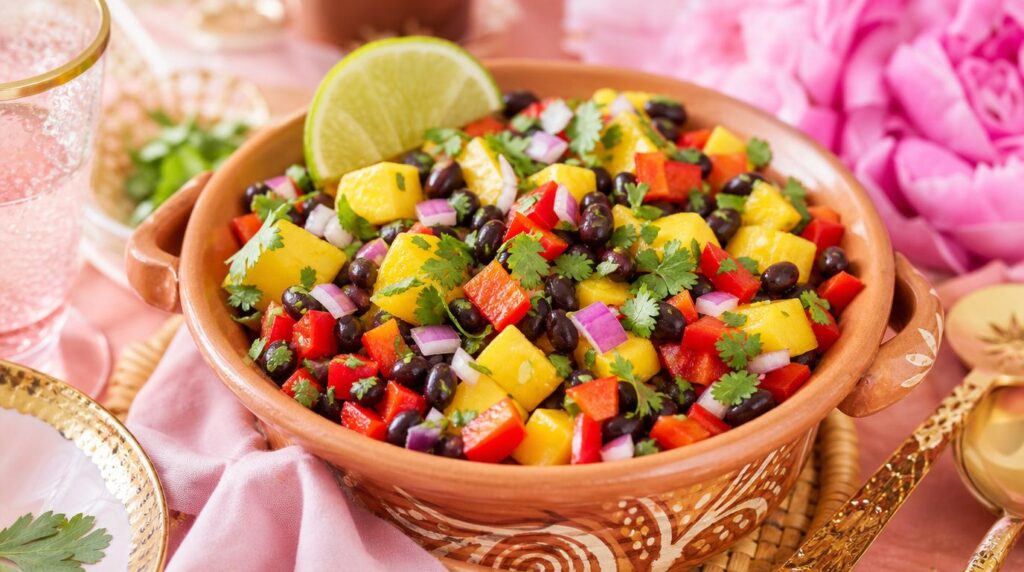
I first threw this together for a last-minute taco night when I needed a side, and it stole the show from the tacos. Now it comes everywhere — picnics, barbecues, spooned over grilled chicken on a Tuesday.
The skin story: mango is loaded with beta-carotene and vitamin C, and black beans bring zinc and protein. Sunshine in salad form.
You’ll need: 1 large ripe mango (diced), 1 tin black beans (rinsed), 1 red bell pepper (diced), 1/4 red onion (finely chopped), 1 jalapeño (optional, minced), a big handful of coriander, juice of 2 limes, 1 tbsp olive oil, salt.
Make it: Toss everything together and let it sit 10 minutes so the lime works its magic. Eat as a salad, scoop with lettuce cups, or spoon over grilled chicken.
Pro tip: Pick a mango that gives slightly to a gentle squeeze, like a ripe avocado. A rock-hard one stays starchy and sour no matter how much lime you add.
Per serving (approx., serves 4): 180 calories, 6 g protein, 7 g fiber.
7. Mediterranean Quinoa Glow Bowl
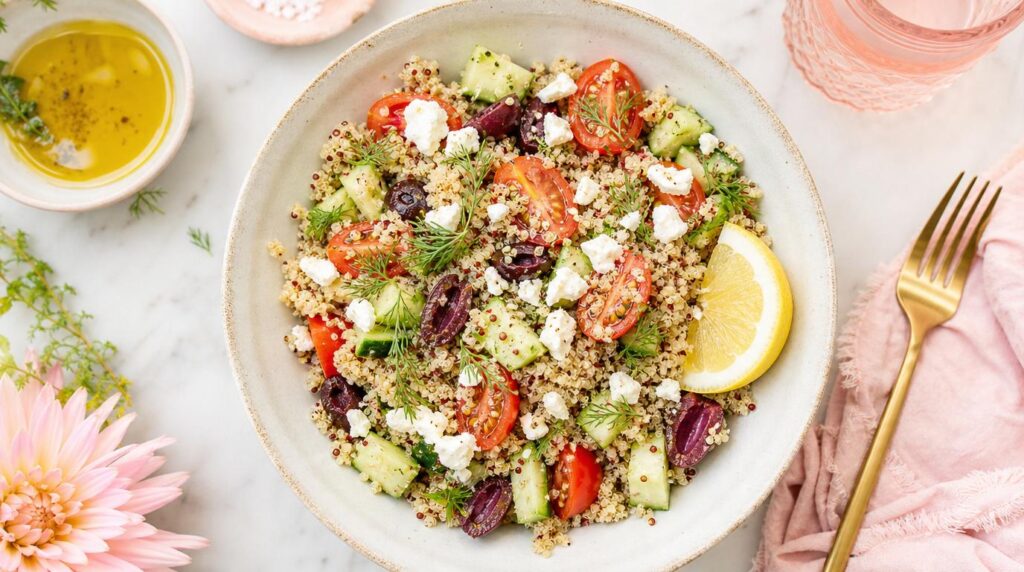
This is the salad that taught me to cook a batch of quinoa at the start of the week. With a tub of it in the fridge, this bowl is five minutes away, and it’s my most-packed work lunch by a mile.
The skin story: quinoa offers complete plant protein for skin repair, olives and olive oil bring the famous Mediterranean fats, and the cucumber-tomato keeps it hydrating.
You’ll need: 1 cup cooked quinoa (cooled), 1 cup cherry tomatoes (halved), 1 cucumber (diced), 1/3 cup Kalamata olives, 1/4 cup feta, 2 tbsp red onion (minced), fresh dill and parsley, 2 tbsp olive oil, juice of 1 lemon, salt and pepper.
Make it: Combine everything in a big bowl, dress with lemon and olive oil, and season well. It’s even better after an hour in the fridge.
Pro tip: Cook the quinoa in stock instead of water and spread it on a tray to cool. You avoid the bland, claggy clump and get separate, fluffy grains.
Per serving (approx., serves 2): 340 calories, 11 g protein, 6 g fiber.
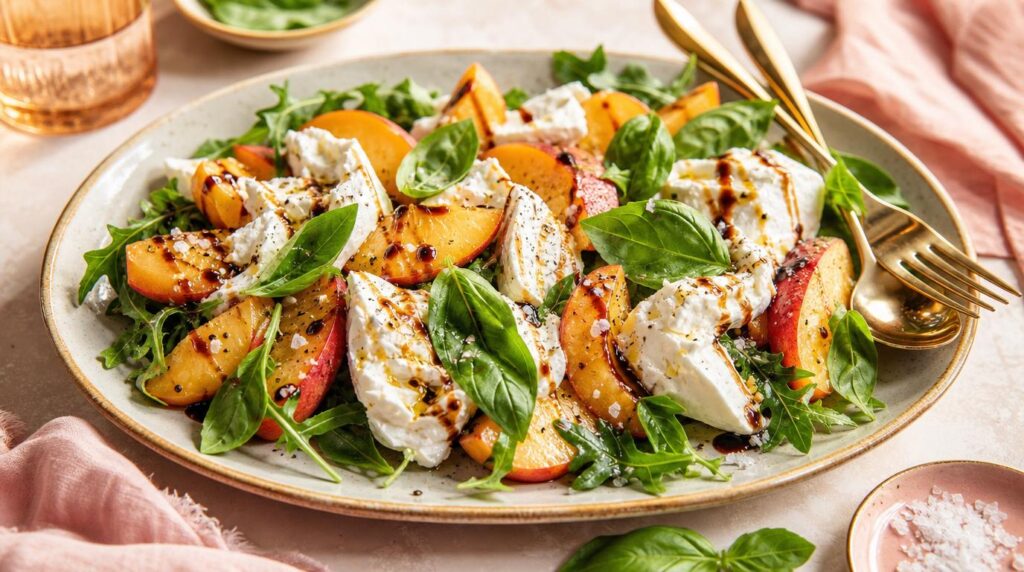
8. Peach, Burrata & Basil Summer Salad
I make this exactly once a year at the height of peach season, and it’s an event in my house. It’s the salad I served the night I wanted to impress my partner’s parents — five minutes of effort, and they still mention it.
The skin story: peaches deliver vitamins A and C, and the small indulgence of burrata makes this the salad you serve when you want someone to fall in love (with you, or with salads).
You’ll need: 3 ripe peaches (sliced), 1 ball burrata, 2 cups rocket, fresh basil leaves, 2 tbsp olive oil, 1 tbsp balsamic glaze, flaky salt, cracked pepper.
Make it: Arrange the rocket and peach slices on a platter, tear the burrata over the top, scatter basil, then finish with oil, balsamic glaze, salt, and pepper.
Pro tip: Take the burrata out of the fridge 20 minutes before serving. At room temperature it spills open into that molten center; straight from cold it stays tight and rubbery.
Per serving (approx., serves 3): 250 calories, 9 g protein, naturally rich in calcium.
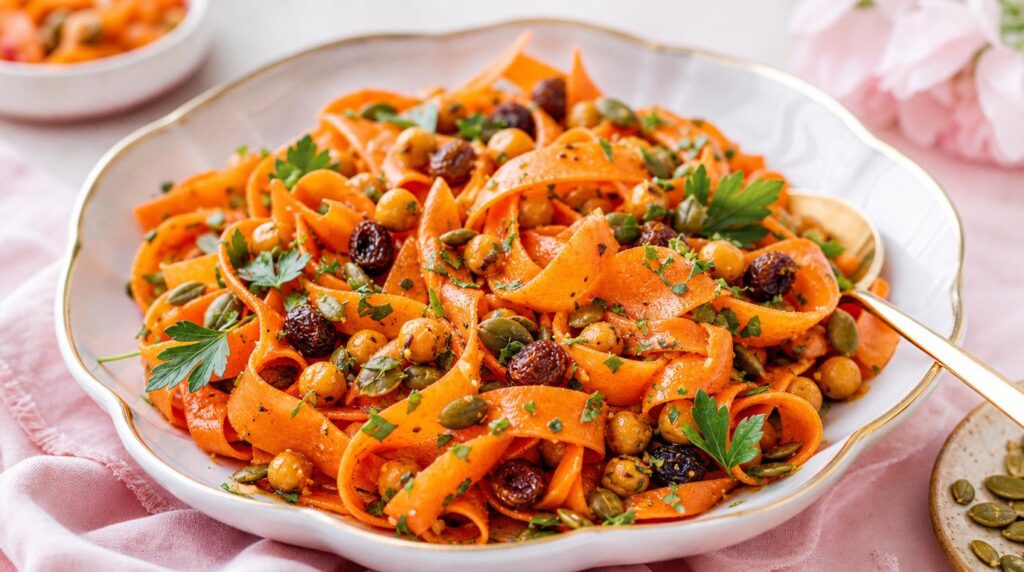
9. Crunchy Carrot, Chickpea & Pumpkin Seed Salad
This unassuming little salad surprised me — I made it to use up a bag of carrots and ended up making it weekly. The warm spices and the chew of the raisins make it taste far more interesting than the ingredient list suggests.
The skin story: the beta-carotene special — carrots for glow-toned skin, chickpeas and pumpkin seeds for the zinc your skin’s repair crew runs on.
You’ll need: 3 large carrots (ribboned or grated), 1 tin chickpeas (rinsed, patted dry), 1/4 cup pumpkin seeds (toasted), 1/4 cup raisins or chopped dates, fresh coriander or parsley. Dressing: 2 tbsp olive oil, 1 tbsp lemon juice, 1 tsp honey, 1/2 tsp cumin, a pinch of cinnamon.
Make it: Whisk the dressing, toss everything together, and let it sit 15 minutes — the carrots soften slightly and soak up all that warm-spiced goodness.
Pro tip: Pat the chickpeas really dry, then crisp them in a hot dry pan for a few minutes. That bit of crunch turns a soft salad into something with real texture.
Per serving (approx., serves 3): 230 calories, 7 g protein, 7 g fiber.
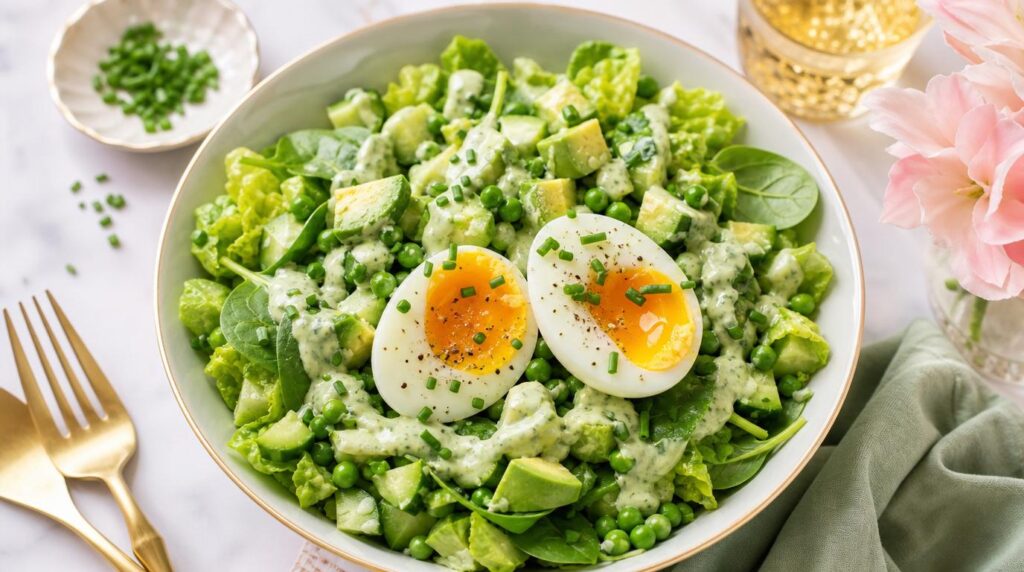
10. The Green Goddess Glow-Up Salad
When I’ve had a stretch of takeaways and travel and my skin is sulking, this is my reset. Avocado in the salad and the dressing, a pile of greens, and that creamy herb sauce that makes eating vegetables feel like a luxury rather than a penance.
The skin story: maximum greens, maximum hydration, healthy fats from avocado twice over. When your skin asks for a reset, this is the answer.
You’ll need: 3 cups chopped romaine, 1 cup baby spinach, 1 cucumber (diced), 1/2 cup frozen peas (thawed), 1/2 avocado (cubed), 2 soft-boiled eggs or 1 cup edamame, fresh chives. Green goddess dressing: 1/2 avocado, 1/2 cup Greek yogurt, juice of 1 lemon, 1 small garlic clove, a big handful of herbs (basil, parsley, chives), 2–3 tbsp water, salt.
Make it: Blend all the dressing ingredients until silky. Toss the greens, cucumber, peas, and avocado with a generous amount, then top with the eggs or edamame and snipped chives.
Pro tip: The dressing keeps for three days if you press cling film right onto its surface — that stops the avocado browning, and it doubles as a dip for crudités.
Per serving (approx., serves 2): 300 calories, 14 g protein, 9 g fiber.
3 Skin-Loving Dressings I Keep on Repeat
A glow salad lives and dies by its dressing, and the shop-bought versions too often sneak in sugar and dull oils. These three take two minutes each and keep in a jar in the fridge for up to five days:
- Everyday Lemon-Olive Oil: 4 tbsp extra virgin olive oil, juice of 1 lemon, 1 tsp Dijon, 1 tsp honey, salt and pepper. Shake in a jar. Goes with everything above.
- Creamy Tahini-Maple: 3 tbsp tahini, 1 tbsp maple syrup, juice of 1 lemon, water to thin, a pinch of salt. Adds zinc and makes any pile of vegetables taste indulgent.
- Berry Balsamic: 4 mashed raspberries, 2 tbsp balsamic vinegar, 3 tbsp olive oil, 1/2 tsp honey. Gorgeous on spinach and anything with goat cheese, plus a bonus hit of vitamin C.
Make It a Glow Habit, Not a One-Off
One beautiful salad is lunch; a summer of them is a complexion strategy. What keeps it going for me is a little Sunday prep — washed greens, a cooked grain, a jar of dressing, toasted seeds — so assembly takes five minutes on a busy day. I follow the season too: the strawberries of June give way to July’s peaches and August’s peak tomatoes, so the salads quietly evolve without me thinking about it. And I pair the skin-loving plate with the unglamorous basics that matter just as much — water, sleep, SPF, and not speaking unkindly to my own reflection.
Most of all, I try to actually enjoy it. Eating for glowing skin was never a restriction project for me — it’s the opposite. It’s peaches and burrata on a warm evening, watermelon and feta eaten cold by an open window, a green goddess bowl that makes me feel like I have my whole life together for at least one lunch. Summer is short. Eat it while it shines.
Which one’s first on your list — the salmon citrus or the peach burrata? If you want to drink your glow too, my hydrating summer drinks are the perfect partner to these bowls.