
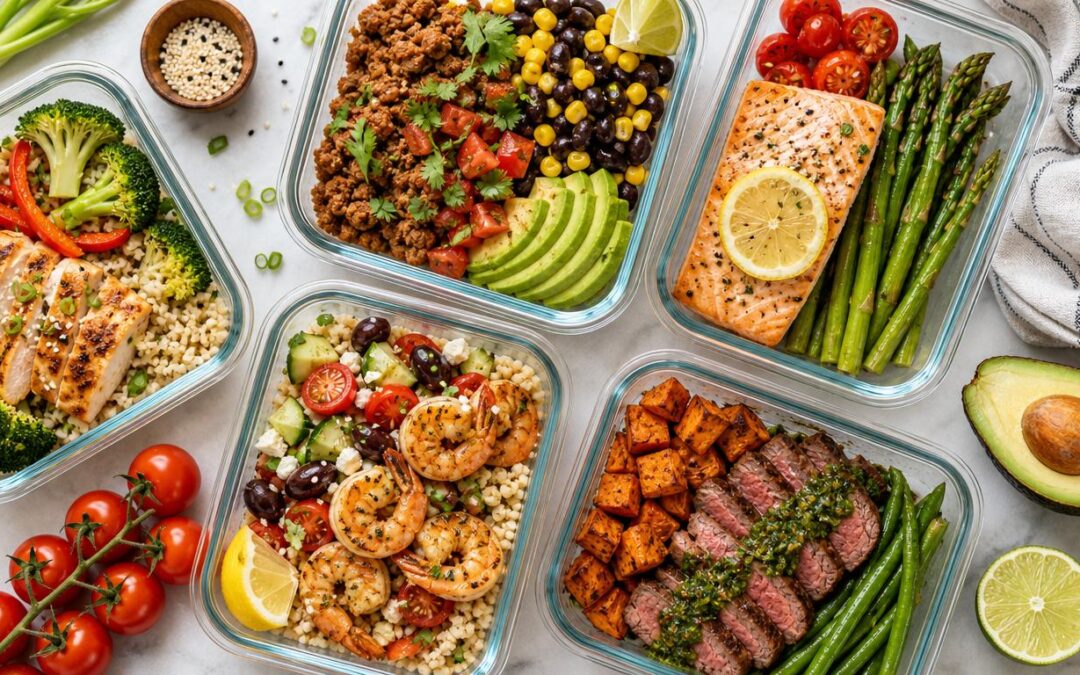
For the longest time, “meal prep” to me meant the grim photos online: fifteen identical tubs of dry chicken and rice that I’d be sick of by Tuesday. So I never did it, and I ate a lot of sad desk lunches and panic takeaways. What finally won me over was realising that good meal prep isn’t about eating the same thing seven days running — it’s about doing a little smart prep so the healthy choice becomes the easy one all week. And you can set the whole thing up in about an hour.
One focused hour on Sunday genuinely saves me hours during the week, cuts my food spending, lowers the stress, and means I eat better without thinking about it. Here’s exactly how I do it, even if you’ve never prepped a meal in your life. Including a few component recipes with amounts so you’re not guessing. No fancy equipment, no rigid rules.
Why It’s Worth One Hour
The whole magic is that prep removes friction. When healthy food is already washed, chopped, and cooked, you actually eat it. Instead of ordering in because you’re tired and the fridge is full of raw ingredients you can’t face dealing with. Prepping saves money, kills the daily “what’s for dinner” decision fatigue, cuts food waste, and makes weeknights dramatically calmer. I think of that hour as a gift to my future self, unwrapped a little each day.
The Beginner Secret: Prep Components, Not Meals
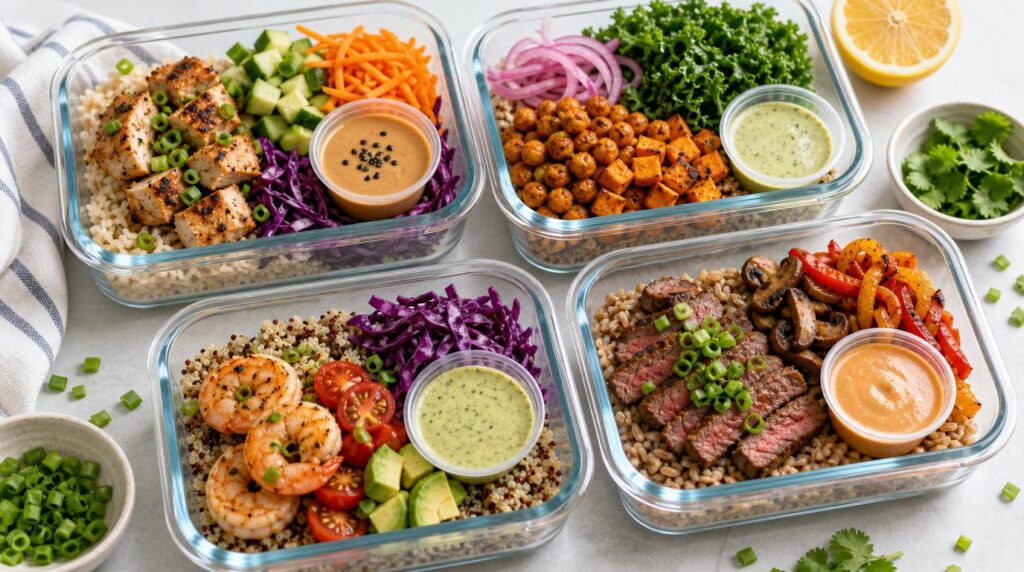
Here’s the single most important thing I learned: don’t prep complete, identical meals. Prep components instead ersatile building blocks you mix and match into different meals all week. A cooked grain, a couple of proteins, some roasted and raw veg, and a sauce or two can become a dozen different meals, which is exactly what keeps boredom (the number one reason people quit) at bay.
Don’t prep meals — prep ingredients. A fridge full of ready-to-go components beats seven identical containers every single time.
What to Buy
Keep the shop simple with a few items from each category: two proteins (say, chicken breasts and a dozen eggs, or chickpeas and ground turkey), one or two grains (rice, quinoa, or pasta), a mix of veg for roasting and eating raw (broccoli, peppers, sweet potato, cucumber, leafy greens), some fruit for snacks and breakfast, and a couple of flavour builders (a jar of pesto, hummus, a dressing you love). That’s a week of mix-and-match meals from one modest list, and it flexes to whatever’s on offer.
Three Component Recipes to Start With
These three are my reliable base every week. Cook them once and they become the backbone of everything else. Nutrition is approximate, per serving.
Foolproof Fluffy Quinoa (your grain base)
Ingredients (makes ~4 servings): 1 cup quinoa, 2 cups stock, pinch of salt.
Method: Rinse the quinoa, bring to a boil with the stock, then cover and simmer on low 15 minutes. Turn off the heat and let it sit, lid on, 5 more minutes before fluffing with a fork.
Pro tip: Cooking it in stock instead of water seasons it from the inside, so your bowls taste good even before the sauce.
Nutrition (per serving): ~160 kcal, 6g protein, 3g fat, 28g carbs.
Sheet-Pan Lemon Chicken (your protein)
Ingredients (makes 4 servings): 4 chicken breasts, 2 tbsp olive oil, juice of 1 lemon, 1 tsp garlic powder, 1 tsp paprika, salt and pepper.
Method: Toss the chicken in the oil, lemon, and spices, spread on a lined tray, and bake at 200°C for 22–25 minutes until cooked through (juices run clear). Rest, then slice or cube.
Pro tip: Roast a tray of chopped veg on the rack below at the same time — two components, one oven, zero extra effort.
Nutrition (per serving): ~250 kcal, 38g protein, 10g fat, 2g carbs.
All-Purpose Lemon-Tahini Sauce
Ingredients (makes ~6 servings): 1/4 cup tahini, juice of 1 lemon, 1 small garlic clove (grated), 1 tsp honey, 4–6 tbsp warm water, salt.
Method: Whisk everything, adding water a tablespoon at a time until pourable.
Pro tip: It thickens in the fridge — just whisk in a splash of warm water to bring it back to drizzling consistency.
Nutrition (per serving): ~70 kcal, 2g protein, 6g fat, 3g carbs.
Your 1-Hour Prep Plan
The trick is to multitask — get things going in the oven and on the stove while you chop:
- Minutes 0–5: Preheat the oven, put a pot of water on, and get your grain cooking.
- Minutes 5–15: Chop veg for roasting, spread on trays, and get them in the oven.
- Minutes 15–30: Cook your proteins — bake the chicken with the veg, pan-cook turkey, boil a batch of eggs.
- Minutes 30–45: Wash and chop raw veg and fruit, and whisk together a sauce or two.
- Minutes 45–60: Portion everything into containers, label if you like, and stack it in the fridge.
That’s it — in one hour you’ve built the blocks for breakfasts, lunches, and dinners all week.
How the Components Become Meals
Here’s how those same basics turn into a week of different meals:
- Grain bowl: quinoa + sliced lemon chicken + roasted veg + tahini sauce. ~480 kcal, 42g protein.
- Big salad: greens + chicken + raw chopped veg + tahini sauce. ~380 kcal, 38g protein.
- Wrap: tortilla + chicken + raw veg + hummus. ~420 kcal, 32g protein.
- Quick stir-fry: prepped veg and protein tossed in a hot pan with sauce over the grain.
- Breakfast: boiled eggs with fruit, or overnight oats prepped at the same time.
Storage and Food Safety
A few simple rules keep prepped food fresh and safe. Let hot food cool before sealing, and get it into the fridge within two hours of cooking. Most cooked proteins and grains keep for three to four days in airtight containers, so plan your later-week meals from longer-lasting components or freeze extras. Store dressings and anything that goes soggy (like dressed greens) separately, and add crunchy toppings fresh. When you’re unsure whether something’s still good, trust your senses and don’t risk it.
The Mistakes That Trip Up Beginners
A few pitfalls catch everyone out, me included. Don’t over-prep on week one. Ten elaborate meals you can’t finish just leads to waste and burnout. Don’t prep foods that don’t keep well, like avocado, dressed salads, or anything fried. Don’t make everything the same flavour or you’ll be sick of it by Tuesday,. This is what the rotating sauces are for. Don’t forget breakfast and snacks, since those are the meals most likely to derail you. And don’t chase perfection: a few prepped basics beat an ambitious plan you ditch by Wednesday.
Beginner Tips for Success
- Start small. Just two or three lunches your first week — build the habit before going all-in.
- Keep a few sauces on rotation. The same chicken tastes completely different with pesto versus peanut sauce.
- Invest in good containers. Clear, stackable ones make it easy to see and grab what you’ve made.
- Don’t prep things that go soggy. Keep dressings separate and add delicate items fresh.
What I’d Tell a Friend
Meal prep doesn’t have to be extreme, boring, or time-consuming. Prep flexible components in about an hour and you set yourself up for a whole week of healthy, easy, genuinely enjoyable meals.
Start this Sunday with just a grain, a protein, some veg, and a sauce, and notice how much smoother the week feels. Your future self the one opening the fridge to a ready meal on a chaotic Tuesday. Will be so grateful. Mine is, every single week.