

By the end of every August, my hair tells the whole story of my summer — the beach trips, the pool afternoons, the days I forgot a hat. Faded, dry at the ends, frizzy, and a little brittle. The first year I panicked and booked a big chop; the next year I tried actually repairing it instead, over a few weeks, and was amazed at how much came back without losing length. This is the recovery routine I now follow every August to head into autumn with soft, healthy hair, and it’s gentler and cheaper than the scissors.
The key, I’ve learned, is being consistent and patient rather than chasing a single miracle product. Repair means restoring moisture, rebuilding strength, and protecting going forward — and below I’ve laid out the exact steps I take, in order, with the reasoning behind each one.
What Summer Actually Does to Hair
Understanding the damage was what finally made me able to fix it rather than just despair at it. UV rays break down the hair’s protein and strip its colour, salt and chlorine pull out moisture and rough up the cuticle, and any heat styling on top of that just compounds it. The result is hair that’s porous, weak, dull, and quick to break or split. Repairing it means tackling both sides at once — rehydrating thirsty strands while rebuilding their internal structure — and with a steady routine over a few weeks, even quite tired hair regains real softness and strength. I have to keep reminding myself that patience is the whole game here.
My Step-by-Step Repair Routine
Step 1: Trim the Worst of the Damage
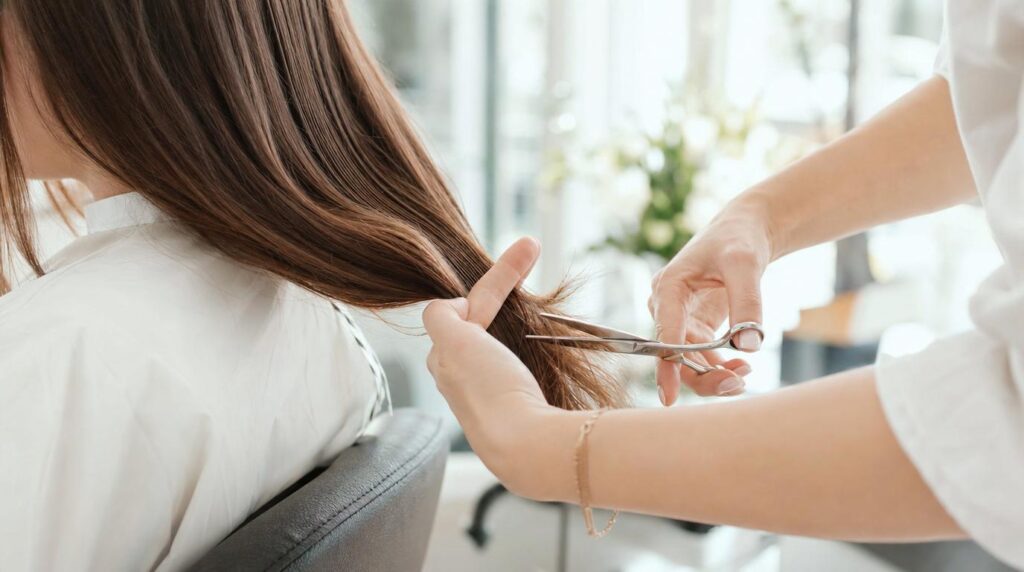
I always start with a small trim, because no amount of conditioning truly mends a split end — it just travels further up the strand if you leave it. I learned to ask for “just the damage” rather than a proper cut, so I keep my length while losing the frayed, see-through ends. Starting from healthy ends makes everything that follows work better.
Step 2: Clarify Once, Then Cleanse Gently
My hair always feels coated and dull at the end of summer, so I use a clarifying shampoo once to strip out the built-up chlorine, salt, product, and minerals. Just once, though — it’s deliberately stripping. After that single reset, I switch to a gentle, sulfate-free, hydrating shampoo so I’m cleansing without undoing all the moisture I’m trying to put back.
Step 3: Deep Condition Every Week
This is the heart of the whole plan for me. Once a week I treat my hair to a rich hydrating mask, applied to clean, damp hair from the mid-lengths to the ends, covered with a cap, and left on for 20 to 30 minutes while I get on with something else. It’s the step that puts back the moisture summer stole, and it’s the one I never skip.
Step 4: Add a Protein Treatment
It took me a while to realize that moisture alone wasn’t enough — my hair also needed its strength rebuilt. So every couple of weeks I use a protein or bond-repair treatment to restore the hair’s structure. The thing I had to learn through a stiff, straw-like overcorrection is balance: I alternate protein with hydrating masks so my hair doesn’t tip into brittle.
Step 5: Seal With a Leave-In and Oil
After every wash I smooth a leave-in conditioner through my damp hair, then add a few drops of a light oil just on the ends to lock the moisture in and smooth the cuticle. This daily habit is what keeps the frizz down and the shine up while everything else is slowly working. It takes me thirty seconds and makes a visible difference.
Step 6: Ease Off the Heat and Keep Protecting
While my hair is recovering, I give the hot tools a proper rest and lean on air-drying and heatless styles instead. On the rare occasions I do reach for heat, I always use a heat protectant first. And since it’s still warm, I keep shielding my hair from sun and chlorine through the last weeks of summer so I’m not undoing the repair as I go.
The Daily Habits That Support It
Alongside the routine, a few small daily habits make a real difference to how fast my hair bounces back:
- Blot with a microfiber towel rather than rubbing, which roughs up already-fragile strands.
- Detangle gently with a wide-tooth comb on wet hair, always starting from the ends.
- Sleep on silk — a silk pillowcase cuts the friction, breakage, and frizz that build up overnight.
- Eat for your hair — protein, omega-3s, and plenty of water support healthy regrowth from the inside.
- Be patient — give the routine several weeks, because real repair is the sum of consistent care, not one product.

Into Autumn With Hair That Feels New
The year I traded panic-chopping for patient repair taught me that summer’s damage really doesn’t have to last. Trimming the worst, cleansing gently, deep conditioning, the occasional protein treatment, and daily protection added up to soft, strong, shiny hair by September — and I kept my length.
Start now and stay consistent, and give your hair the care it’s been quietly asking for all summer. By the time autumn arrives, you’ll be heading into the new season with healthy, glossy hair — which is honestly one of my favourite kinds of fresh start.