
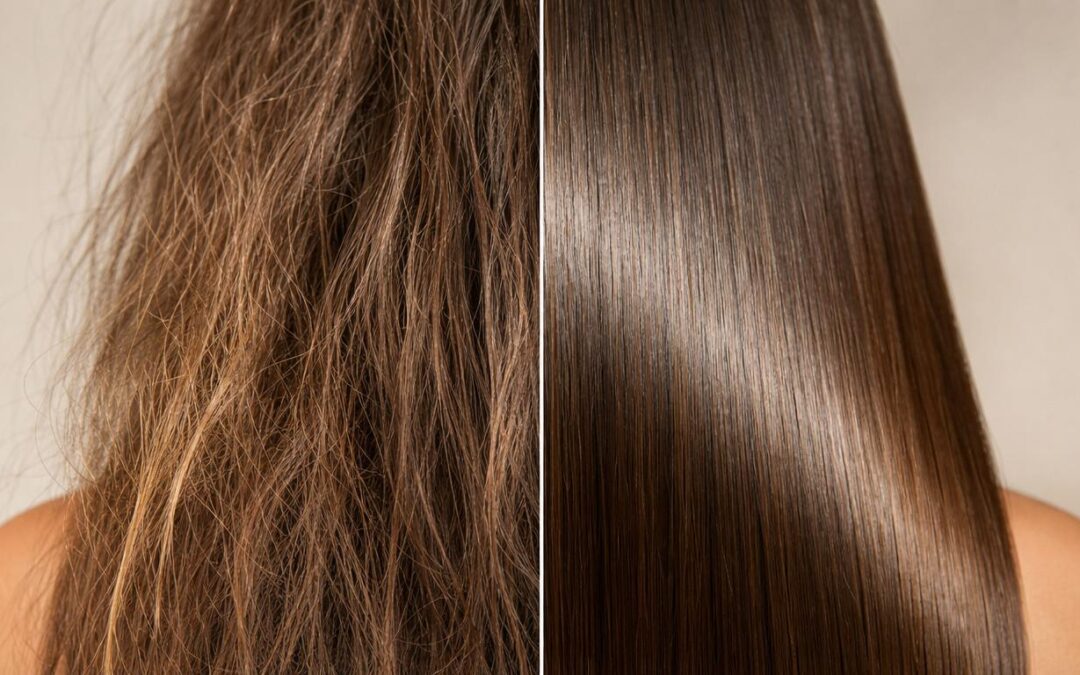
A few summers ago I came back from a week at the coast with what I can only describe as hay attached to my head. My ends were pale and crunchy, my color had gone brassy, and the frizz started about four seconds after I stepped out of the shower. I’d spent the whole trip carefully reapplying sunscreen to my shoulders and never once thought about my hair. That was the summer I finally connected the dots: I wasn’t cursed with bad hair, I was quietly sabotaging it with a handful of small, daily habits.
The good news I wish someone had told me sooner is that almost every bit of summer damage is self-inflicted — which means it’s also fixable. Below are the seven habits that were wrecking my hair (and probably yours), why each one does the damage it does, and the simple swaps that brought the softness back. None of them cost much or take more than a couple of minutes, and you can start with just one.
Why Summer Is Secretly So Hard on Hair
Before the mistakes, it helps to know what you’re up against, because once I understood the mechanism the fixes finally made sense. Summer comes at your hair from three directions at once: UV rays break down the protein and pigment inside each strand, chlorine and salt water pull moisture out, and humidity swells the outer cuticle so it lifts and frizzes. Stir in heat styling and daily sweat and your hair is essentially fighting a low-grade battle every single day.
Here’s the part that reframed everything for me, though: nearly all of that damage traces back to one root issue, which is moisture loss. Sun, pool, sea, and even the air conditioning indoors draw water out of your hair faster than it can be replaced. Dry hair has a raised, roughened cuticle, and a raised cuticle is precisely what makes hair look dull, tangle instantly, and frizz at the first hint of damp air. As you read on, notice how almost every fix is really just protecting or replacing water.
How to Tell If Your Hair Is Already Struggling
Not sure whether you’re having one bad hair day or a genuine summer slump? These are the signs I now recognise immediately:
- It feels rough or straw-like, especially toward the ends.
- It tangles the second it dries and fights the comb.
- Your color looks faded, brassy, or flat compared with spring.
- You’re seeing more breakage and split ends than usual.
- Frizz shows up within minutes of going outside.
If two or more of those sound familiar, don’t despair — mine ticked all five and recovered fine. Your hair just needs you to stop the habits draining it and start handing back what the season keeps taking. That starts with the seven below.
Mistake #1: Leaving Your Hair Totally Unprotected From the Sun
This was my big one. I’d never dream of a beach day without sunscreen on my skin, yet my hair got nothing. UV light degrades the cuticle, fades color, and leaves strands brittle and thirsty — and if your hair is color-treated or on the lighter side, the sun oxidises the pigment and turns rich tones dull or orange-y. That brassy week of mine was UV, plain and simple.
The fix: Mist a leave-in conditioner with UV filters through your lengths before you head out, and top it up after a few hours in strong sun. And don’t dismiss a hat — a wide brim or a pretty silk scarf is the easiest shield there is, and it saves your scalp and part line from burning too. I keep a cheap travel-size leave-in in my beach bag now and reapply it like I would lip balm.
Mistake #2: Diving Into the Pool With Bone-Dry Hair
Dry hair is thirsty hair, and thirsty hair drinks in chlorinated or salty water like a sponge, pulling all those harsh minerals deep into the strand. I learned this the hard way when my blonde streaks went faintly green. Going in dry is one of the most overlooked culprits behind that crunchy, matted, post-swim texture.
The fix: Soak your hair with clean tap water before you swim, then smooth a little leave-in or oil through it. Hair that’s already saturated simply can’t absorb much chlorine or salt, so far less of it gets in. Rinse again the moment you’re out, because the longer those chemicals sit, the more they dry and discolor. This single two-minute habit made the biggest visible difference for me.
Think of pre-soaking your hair like filling a glass before a spill — there’s no room left for the bad stuff to soak in.
Mistake #3: Washing Too Often, and Always With Hot Water
When you’re hot and sticky, a daily hot shower feels like heaven — but washing too frequently, especially with hot water, strips the natural oils that keep hair soft and shielded. I used to wash every single day in July and couldn’t understand why my ends were parched while my roots got greasy by noon. That contradiction is the classic signature of over-washing.
The fix: Cut back to two or three washes a week for most hair types, and rinse with lukewarm or cool water. Cooler water helps the cuticle lie flat, which locks in moisture and bumps up shine. On the in-between days, a quick water rinse or a little dry shampoo at the roots keeps you feeling fresh without the strip. If you sweat heavily after a workout, rinse with water only and save the shampoo for proper wash days.
Mistake #4: Raking a Brush Through Soaking Wet Hair
Hair is at its most fragile when it’s wet, and summer means more washing and more swimming — so more wet detangling. Dragging a brush through soaked, knotted strands snaps them and creates the split ends that make frizz dramatically worse down the line. I winced through years of this before I changed my approach.
The fix: Detangle with a wide-tooth comb or a flexible wet brush, and always start at the ends, working upward in small sections. Spray a slip-boosting leave-in or detangler through first so the comb glides instead of yanks. It feels slower, but the patience here saves you weeks of frizz — rushing this one step quietly undoes everything else you’re doing right.
Mistake #5: Reaching for the Hot Tools Anyway
Here’s the irony I lived for years: I’d blow-dry and flat-iron specifically to beat the frizz, never noticing that all that heat was compounding the moisture loss the sun and pool had already started. Stacking heat damage on top of sun damage is the fastest route to brittle, lifeless hair — and in real humidity, that sleek look rarely survives past lunch anyway.
- Lean into your natural texture on as many days as you can. Summer is the ideal season to let it air-dry.
- Use a heat protectant every single time you do style. No exceptions, even for a quick touch-up.
- Try heatless styles — braids, buns, twists — that work with the weather instead of against it.
- Turn the temperature down. Most hair styles perfectly well below the highest setting.
Mistake #6: Skipping Your Weekly Deep Treatment
Your everyday conditioner is fine for daily upkeep, but it can’t keep pace with the moisture summer drains away. For a while I told myself my regular conditioner was “enough,” and my hair slowly ran a hydration deficit all season without me noticing. Skipping the weekly deep treatment is one of the quietest mistakes there is.
The fix: Add a hydrating mask once a week, and a protein treatment once or twice a month if your hair starts to feel mushy or stretchy. Smooth the mask onto damp hair, concentrate on the mid-lengths and ends, and let it work while you finish your shower. For a deeper result, tuck your hair under a shower cap so your own body heat helps it absorb — that little trick genuinely makes my mask work harder.
Mistake #7: Going to Bed With Loose, Damp Hair
Tossing and turning on a cotton pillowcase with your hair loose creates friction all night, and in summer, sleeping on damp hair makes the tangling and frizz worse by morning. Cotton also quietly wicks moisture straight out of your strands while you sleep, which is the very last thing summer hair can spare.
The fix: Switch to a silk or satin pillowcase to cut friction and help hair hold onto its moisture. Loosely braid your hair or pile it into a soft “pineapple” at the crown, and get it at least mostly dry before bed. I resisted the silk pillowcase for ages thinking it was a gimmick — now I won’t sleep without it, and my mornings are so much calmer for it.
What to Look For When You’re Buying Products
When you go shopping to undo the damage, the ingredient list tells you more than the front of the bottle. These are the heroes worth seeking out:
- Hyaluronic acid and glycerin — humectants that pull moisture into the strand.
- Shea butter and natural oils (argan, coconut, jojoba) — seal in hydration and smooth the cuticle.
- Hydrolyzed keratin or proteins — rebuild strength in over-stretched, damaged hair.
- Panthenol (pro-vitamin B5) — adds softness, shine, and flexibility.
- Aloe vera — soothes a sun-stressed scalp and lightly hydrates.
My Simple Summer Rescue Routine
You don’t have to fix all seven at once — I certainly didn’t. Pick the two or three that hit closest to home and start there. Here’s the stripped-down version of what I do now:
- Protect before sun and swimming (UV mist, leave-in, a hat).
- Wash less, with cooler water.
- Detangle gently, ends first.
- Deep condition once a week.
- Sleep on silk with hair loosely tied up.
How Long Until Your Hair Bounces Back?
I’ll be honest, because the bottle promises can be misleading: truly damaged hair can’t “heal” the way skin does, because hair is no longer living tissue once it grows past the scalp. What good products do is smooth, strengthen, and seal the cuticle so your hair looks and feels healthy again. With steady moisture and gentle handling, I usually see a real difference within two to three weeks. For the worst of it, a small trim to clear the fried ends plus a few weeks of care does more than any miracle product — and after that, prevention keeps you out of trouble.
The Takeaway
Dry, frizzy summer hair was never my destiny, and it isn’t yours either. It’s almost always the sum of a few small habits that are genuinely easy to change once you spot them. Protect against the sun and water, be gentle, and feed your hair the moisture the season keeps stealing, and you’ll be surprised how fast the shine and softness return.
Start with one fix today, add another next week, and by the time the air cools your hair will be in better shape than when summer began. Mine was — and honestly, that brassy, crunchy week at the coast turned out to be the best thing that ever happened to my routine.